
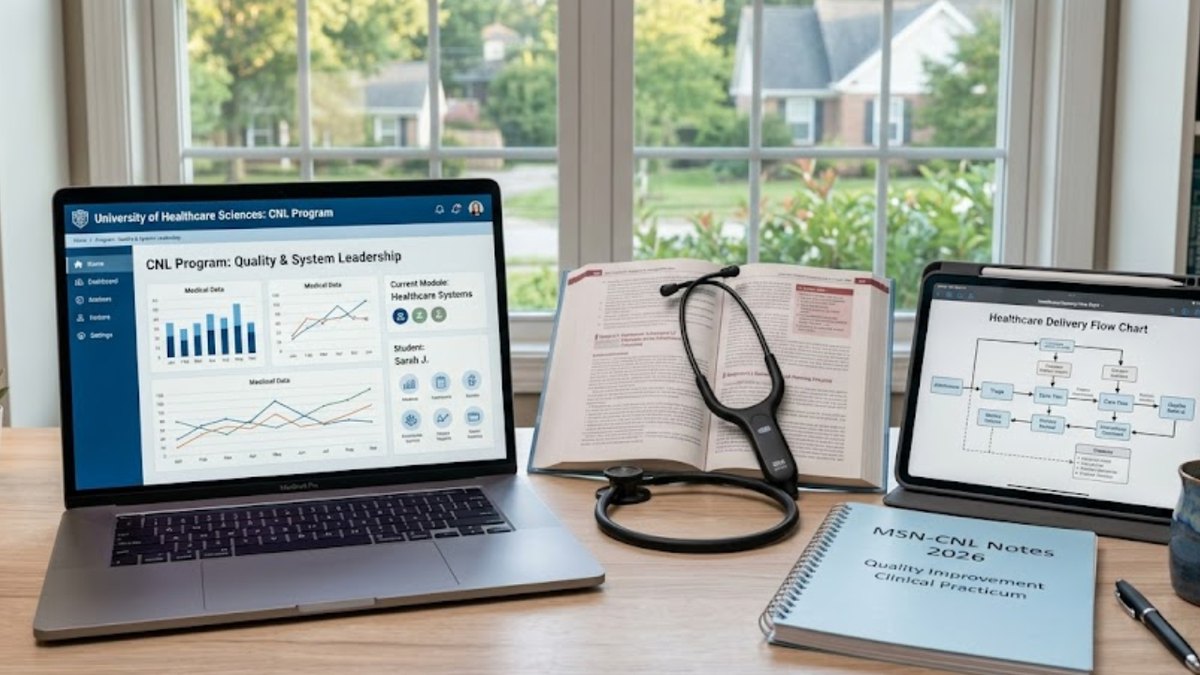
A Master of Science in Nursing – Clinical Nurse Leader is a degree qualification that focuses on healthcare systems, leadership techniques and organizational efficiency. Unlike Nurse Practitioner focused Master’s degrees, a clinical nurse leader (CNL) is less concerned with primary care and more with the system as a whole.
The degree is one of the more forward-thinking healthcare qualifications available in the US, teaching the latest evidence-based research on organizational improvements across healthcare settings. It is perfect for Registered Nurses who want to move into a systems-based leadership role, while still being in touch with the clinical side of the profession.
In This Article:
Why It is Worth It – Job Demand, Salaries and Future Outlook
Straight up – being a CNL is an above-average paid job in most areas of the US. However, the degree is not easy and there are qualifications you need before you even begin. But should you persist through, the job is both financially and personally rewarding.
Average salaries for a clinical nurse leader are around $130,000 a year. In some states, like New York and California, that rises to around $160,000-plus. However, these places have a higher cost of living so there is a trade off in what your increased salary might be worth.
The demand is rising for what is a relatively new career in itself. With US hospitals often facing staff shortages, keeping patient care to a suitably high standard while being more efficient and cutting costs is increasingly important across healthcare settings.
Clinical nurse leader jobs are also almost future proofed. You will learn about new tech during your degree course, and you will almost certainly be either using it or be part of introducing it into systems during your day-to-day career roles afterwards. Which stands you in good stead for keeping ahead of new developments along your career path.
Study Settings – Part Time Online, Full Time Campus or Hybrid
Being a thoroughly modern degree, MSN CNL courses are usually designed with online study, at least in part, in mind. Although all programs require 500-plus practicum hours as part of the two year course, these can be arranged locally to wherever students are located. Outside of that coursework is 100% online, often with asynchronous study. Which makes this a perfect degree for busy RNs to work around irregular part-time shifts.
If you’re looking to study a clinical nurse leader masters program online then contacting a respected and accredited provider like a top university is probably your next step. They can run you through every step of the process, from registration to the program timeline to how your clinical placement will work around online courses.
The prerequisites to studying an MSN-CNL degree include:
An active RN licenseA Bachelor of Science in Nursing, usually with a 3.0 GPA or higherTech literacy with modern digital collaboration tools
How MSN-CNL Curriculums Have Changed to Reflect Healthcare in 2026
Being a modern role for modern healthcare systems, CNL degrees integrate the use of tech, and researching and analyzing its effects on healthcare practice, to the forefront of study.
Courses have a strong focus on data collection, analysis and problem solving implementation and promoting digital literacy among healthcare workers. Modern data tracking software can be used to accurately pinpoint inefficiencies in any system – including healthcare.
Some programs even bring in complex simulated environments and digital leadership sandboxes, where students can manage crisis scenarios in a virtual, monitored setting before potentially engaging with real-world settings later in their careers.
What You’ll Learn and Future Career Prospects
An MSN-CNL program will teach students to operate in the gap between clinical science and systems-based leadership. While patient-led, bedside tasks are the output goal – CNL’s are trained to look across entire departments, clinical units or even hospitals.
Three core areas remain the same as in Nurse Practitioner MSNs – advanced physiology/pathophysiology, advanced pharmacology and advanced physical assessment. However, additional areas of study include:
Quality Improvement AnalysisHealthcare informatics and big dataHealthcare finance and management organization
Because the Clinical Nurse Leader role learns a collection of skills crafted specifically for application across a broad range of healthcare settings, employment prospects are equally wide post graduation.
Hospitals and outpatient care centers are still common starting points. However, other possible working environments for newly-qualified CNLs include government healthcare programs like the Veterans Association, health technology firms and startups, medical consultancy firms and even clinical education roles in nursing.
Salaries are relatively consistent across all roles, with the CNL position being relatively new and in demand. There is also a possibility that a career as a CNL could inspire you to start your own medical tech company, filling in a gap in the market with a beforehand unseen technological need that you discovered as part of your studies or early career roles.
Anything is possible at the fast-moving intersection between tech and healthcare, and clinical nurse leaders will be well positioned to make the most of that in a quickly evolving market.