The conversation around hybrid work has moved past the question of whether it works. Most organisations have already answered that. What is still being worked out, particularly in a market like London, is where hybrid work actually happens day to day, and what kind of space makes it function well rather than just technically possible. That question is reshaping how commercial real estate operators think about the city, and it is why the rise of the flexible london coworking space has become one of the more telling indicators of where corporate work culture is heading.
In This Article:
The Shift From Headquarters to Network
For decades, a company’s relationship to office space was straightforward: one address, one lease, one long-term commitment. Hybrid work has broken that model apart. Employees now split their week between home, transit, client meetings and occasional headquarters visits, and the traditional single-site office increasingly sits idle for large stretches of the working week.
What has replaced it, particularly among scale-ups, professional services firms and international teams, is a networked approach to space. Instead of one building, companies are opting into a portfolio of flexible locations that can flex up or down depending on headcount, project cycles or expansion plans. This is not simply downsizing. It is a deliberate move toward treating office space as a service rather than a fixed asset, procured in the same way a company might procure cloud infrastructure: scalable, distributed and paid for in proportion to actual use.
London has been a useful barometer for this trend because it combines extremely high commercial rents with an unusually mobile, multi-employer workforce. Businesses here are less willing than most to pay for square footage that goes unused three days a week.
What “Flexible” Actually Means in Practice
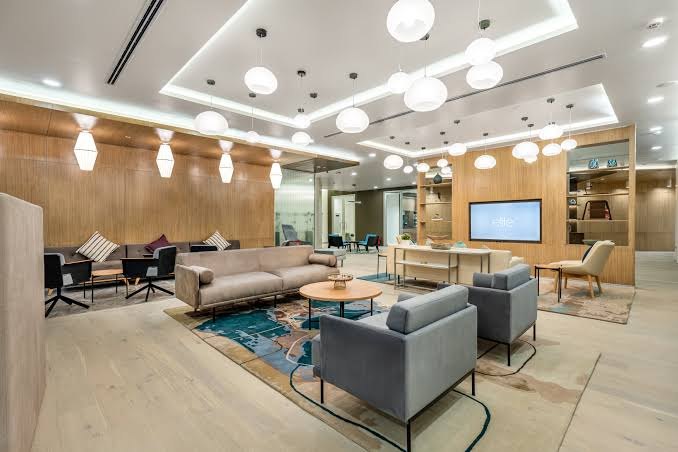
The word flexible gets used loosely, so it is worth being specific about what a modern flexible workspace is expected to deliver in 2026. It is no longer just a bank of hot desks. Operators are now expected to offer a genuine range of formats under one roof: open coworking lounges for solo work and casual collaboration, private offices for teams that need a fixed base with a lockable door, and larger enterprise suites for established departments that still want the flexibility of a rolling agreement rather than a ten-year lease.
Meeting rooms, phone booths for calls, and event space for client-facing gatherings have also become baseline expectations rather than premium add-ons. So has a level of hospitality that would have seemed unusual in an office five years ago: reception services, secretarial support, and interior design that draws more from hotel lobbies than from traditional corporate floors.
A London Example Worth Watching
One recent entrant illustrates this shift clearly. The Work Project operates from One Leadenhall in the City of London, occupying levels 22 and 23 of the tower, roughly 30,000 square feet with 360-degree views across the skyline. The interiors, designed by Farago Han Studio, lean deliberately into a hospitality-led aesthetic rather than a conventional office look, and the format spans the full range described above: a coworking lounge and hot desks, private Standard Offices suited to teams of five to twenty, and larger Enterprise Offices for organisations of twenty or more, alongside bookable meeting rooms, phone booths, event space and reception and secretarial services.
What is arguably more significant than the fit-out is the membership structure sitting behind it. Access through this single City location also connects members to The Work Project’s wider portfolio of around twenty locations across Singapore, Hong Kong and Australia. For a City of London tenant with clients or teams in Asia-Pacific, that is a genuinely different value proposition to a standalone serviced office. It reflects a broader pattern among newer flexible operators: the individual building matters less than the network it belongs to.
Why This Matters for Hybrid Strategy
For companies actively rethinking their real estate footprint, the appeal of this model is less about aesthetics and more about optionality. A finance or professional services team headquartered in the City can take a private office for a core group while giving remote or travelling staff standing access to a coworking lounge on the same floor. A business with operations across Asia-Pacific can put down a London presence without negotiating a separate lease and separate facilities contract for each market.
This is the practical shape hybrid work strategy is taking in 2026: less about where employees sit on any given day, and more about whether the underlying infrastructure can absorb constant change in team size, location and working pattern without a company having to re-negotiate its property commitments every time.
Looking Ahead
The next phase of this trend is likely to be consolidation around fewer, higher-quality flexible operators rather than a further proliferation of options. Businesses evaluating space are increasingly comparing amenities, design quality and international reach in the same conversation, rather than treating flexible offices as a fallback from traditional leasing. As more operators bring hospitality standards and cross-border portfolios into commercial towers like One Leadenhall, London’s flexible workspace market looks set to keep functioning as an early signal for how hybrid work settles into its next, more permanent phase.