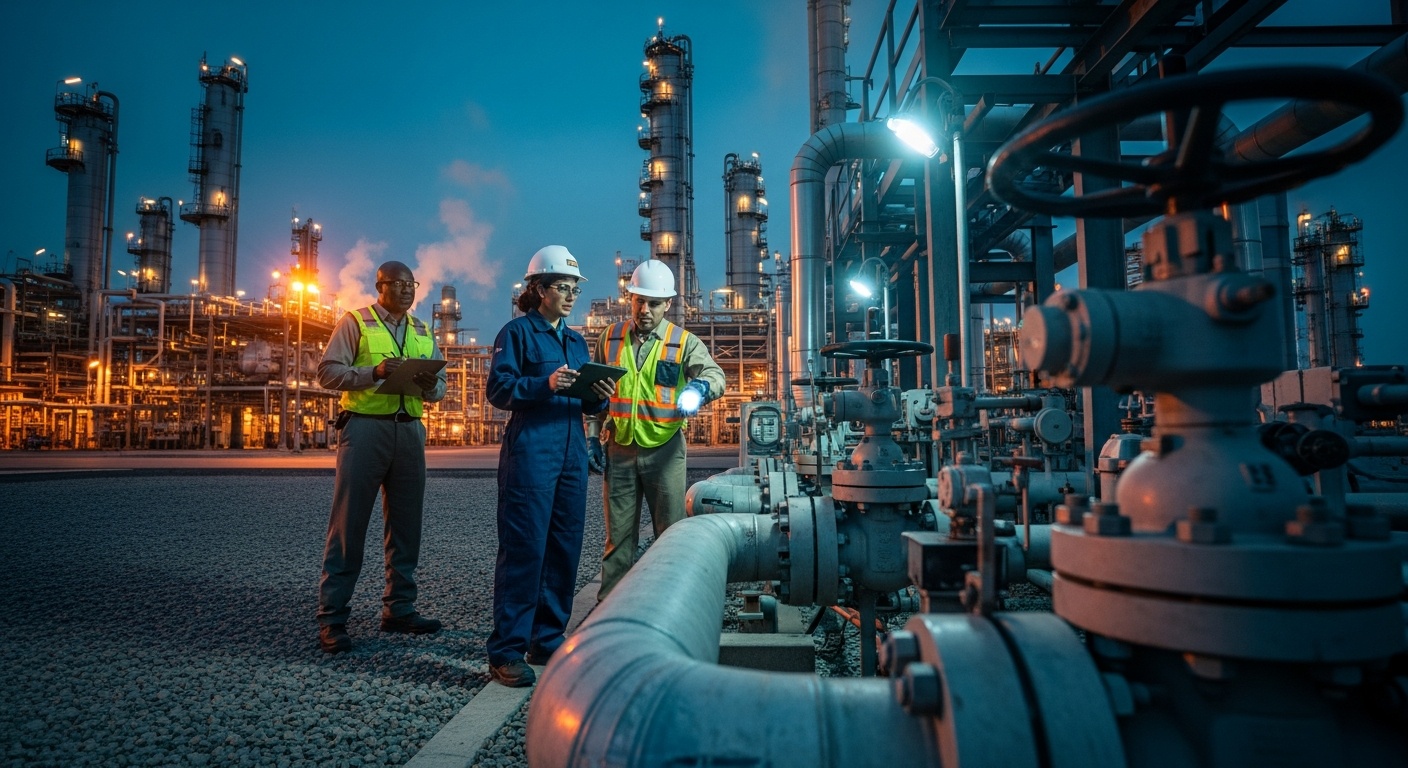
A report from the U.S. Chemical Safety Board (CSB) has sent a chilling reminder through the industrial sector: the deadliest workplace disasters are often the most preventable. The federal investigation into a fatal hydrogen sulfide leak at a Texas refinery concluded that the tragedy was the result of systemic safety failures, a reality that demands immediate attention from leadership. This incident is not an isolated event; a significant chemical incident occurs roughly every 2 days in the U.S., underscoring the urgency and relevance of your role as a leader. This event offers critical, non-negotiable lessons for every leader overseeing a workforce. Understanding where these protocols failed can provide you with a clear roadmap to reinforce your own safety culture and protect your team.
In This Article:
The Anatomy of a “Completely Preventable” Disaster
The CSB’s final report on the PEMEX refinery incident deconstructs not a single mistake, but a cascade of broken processes that led to tragedy. For you, as a facility manager or HR leader, these findings are a clear example of what to avoid. The investigation revealed that workers released over 27,000 pounds of highly toxic hydrogen sulfide gas simply because they opened the wrong pipe. This catastrophic error was not a moment of individual carelessness but the end result of deep, systemic flaws in the refinery’s operational protocols. By examining these failures, you can identify and rectify similar vulnerabilities within your own organization before they lead to disaster.
A Cascade of Systemic Failures
The core of the incident was a series of interconnected breakdowns that disabled every layer of safety. The CSB report highlighted several key issues that every industrial leader should scrutinize in their own operations. The primary error stemmed from inadequate equipment identification; workers were given drawings and flange lists that were insufficient to distinguish between “nearly identical segments” of piping, leading them to unbolt a line still pressurized with deadly gas. This highlights a critical lesson: in a high-stakes environment where components look alike, assumptions are completely unacceptable and procedural certainty is paramount. Without a clear, standardized, and physically verified labeling system, you are leaving your team’s safety to chance.
Beyond the physical misidentification, the CSB found that the work permit process was dangerously flawed. The permit issued for the job was overly broad and failed to address the specific, immediate hazards of performing maintenance right next to an active, pressurized unit. A generic checklist is not a substitute for a dynamic hazard assessment that considers the full context of the work environment. You must ask yourself: Does your permitting process force a thoughtful review of the specific risks for that job, on that day, in that location?
The PEMEX incident shows that a “paperwork-only” approach to safety is a direct path to failure. Furthermore, the victims were contract workers, a fact that underscores the absolute necessity of integrating all personnel, regardless of employment status, into your safety culture. Contractors cannot be treated as a separate entity; they must receive the same rigorous training, oversight, and empowerment as your full-time employees, as they are often placed in the most hazardous situations.
Your Responsibility: Forging a Resilient Safety Culture
Understanding the anatomy of the PEMEX disaster is the first step; the next is taking decisive action to ensure it never happens on your watch. This is where your leadership becomes critical. The goal is to move your organization beyond a mere compliance mentality to one of unwavering commitment. True safety is not about checking boxes on a form—it’s an active, living culture that permeates every decision and action on site. The need for this shift is particularly urgent in high-risk areas. For example, between January 2021 and December 2023, Texas led the nation with at least 79 hazardous chemical incidents, underscoring the constant threat and the need for proactive, not reactive, leadership from professionals like you.
The Pillars of an Effective Safety Program
Strengthening your safety protocols doesn’t have to be an insurmountable task. By focusing on a few foundational pillars, you can build a resilient process that protects your people and your operations. The key is to implement clear, verifiable, and consistently enforced procedures that leave no room for ambiguity. This proactive approach turns safety from a policy document into a daily practice.
- Implement “Positive Identification” Protocols: Mandate a system in which equipment, such as pipes and valves, is physically tagged and cross-verified against diagrams and work orders before any maintenance begins. This simple step of “show and tell” verification could have prevented the PEMEX tragedy entirely.
- Overhaul Your Hazard Assessments: Ensure your work permits are dynamic, not generic. They must identify specific risks for that day and that location, including proximity to active processes, and be reviewed and signed off on by every worker involved at the job site.
- Strengthen Contractor Onboarding and Oversight: Your safety standards must apply rigorously to everyone on site. This means comprehensive safety training tailored to your facility, regular performance audits, and clear lines of communication for all contract workers.
- Invest in Continuous Training and Drills: Human error is cited as a major cause of refinery accidents. Regular, realistic training that simulates high-stress scenarios ensures that correct procedures become second nature, even when the unexpected occurs.
- Foster a “Stop-Work Authority” Culture: Empower every single employee and contractor to halt any activity they deem unsafe, without fear of reprisal. This is the ultimate sign of a healthy safety culture, turning every worker into a safety advocate.
The True Cost of Negligence: Human and Financial Fallout
When safety protocols fail, the consequences extend far beyond regulatory fines and operational downtime. The true cost is measured in human lives and shattered families. The PEMEX incident resulted in the deaths of two workers and injuries to dozens more, a devastating outcome from what investigators called a “completely preventable mistake.” For every industrial accident headline, there are families, colleagues, and communities left to cope with the aftermath. As a leader, remembering this human toll is the ultimate “why” behind every safety investment and procedural check you implement.
The Financial Impact
While the human cost is immeasurable, the financial fallout from a preventable disaster is staggering and can threaten a company’s very existence. Proactive investment in safety is not a cost center; it is one of the soundest financial decisions an industrial organization can make. The contrast between proactive investment and reactive, post-incident costs is stark.
| Cost Category | Proactive Safety Investment (Example Costs) | Post-Incident Cost (Real-World Consequences) |
| Equipment & Systems | Standardized labeling, digital permit systems, improved monitoring tech. | Millions in property damage and loss of use (e.g., $12.3M at PEMEX). |
| Personnel & Training | Ongoing safety training, contractor certification programs, dedicated safety officers. | Wrongful death lawsuits, extensive worker compensation claims, long-term medical care for survivors. |
| Regulatory & Legal | Compliance audits, legal counsel for proactive policy review. | Severe federal/state fines, expensive litigation, and potential criminal charges. |
| Brand & Reputation | Building a reputation as a safe, responsible employer. | Irreparable damage to public trust, loss of contracts, and difficulty in hiring top talent. |
| Total Financial Impact | A manageable, predictable operational expense. | Potentially billions (e.g., the BP Texas City disaster cost ~$2.5B). |
Navigating the Aftermath
When these tragedies occur, the legal and financial fallout for a company can be immense, while workers and their families are left to navigate a complex and painful aftermath. Victims often face staggering medical bills, lost income, and a difficult search for justice, underscoring the severe consequences of Houston refinery explosions and negligence. This legal reality for victims serves as another powerful reminder of the profound corporate responsibility to prevent such incidents from ever happening. For leaders, viewing safety through this lens reinforces the understanding that robust protocols are not just about regulatory compliance but about fundamental duties of care to every person on site.
The Future of Work is a Safe Workplace
The CSB’s findings on the PEMEX refinery disaster are not just an indictment of one company but a critical call to action for all industrial leaders. The future of work, especially in high-risk sectors, depends on a foundational and unwavering commitment to protecting your people. These are not just employees; they are individuals who place their trust in you and your organization’s safety systems every single day. Letting them down is not an option. The path to a safer workplace is built on clear procedures, continuous training, and a culture where every person is empowered to be a guardian of safety.
Don’t wait for a near-miss or a tragic headline to re-evaluate your responsibilities. Use these lessons to start a conversation with your team today. Schedule a top-to-bottom review of your safety protocols, engage your frontline workers to identify hidden risks, and reaffirm that safety is truly non-negotiable in your organization. You have the power and the obligation to ensure your workplace is defined by its foresight, not its failures. The transformation toward a safer industrial future begins with your commitment.